EN
EN
 AR
AR BG
BG HR
HR CS
CS DA
DA NL
NL FI
FI FR
FR DE
DE EL
EL HI
HI IT
IT JA
JA KO
KO NO
NO PL
PL RO
RO RU
RU ES
ES SV
SV TL
TL ID
ID SR
SR VI
VI HU
HU MT
MT TH
TH TR
TR AF
AF MS
MS GA
GA BN
BN NE
NE
Why Work Boots with Breathable Mesh Are Good for Hot Weather
When temperatures climb on a job site, the type of work boots your team wears makes a larger practical difference than most safety managers expect. Standard full-leather or sealed synthetic-upper work boots are built to keep things out: moisture, debris, and cold air. But in hot weather, that same enclosed construction keeps something in: heat and sweat. Over a long shift, the trapped environment inside those work boots becomes genuinely uncomfortable, and when workers are uncomfortable, their compliance with PPE requirements drops. That is the core safety problem breathable mesh work boots are designed to address.
As someone who works closely with industrial procurement teams to match footwear specifications to actual work conditions, I see this challenge repeatedly during summer months and in year-round high-temperature environments. The answer is not complicated once you understand how breathable mesh functions inside work boots, and why it does not compromise the protection workers depend on.
What Happens Inside Non-Breathable Work Boots in Hot Weather
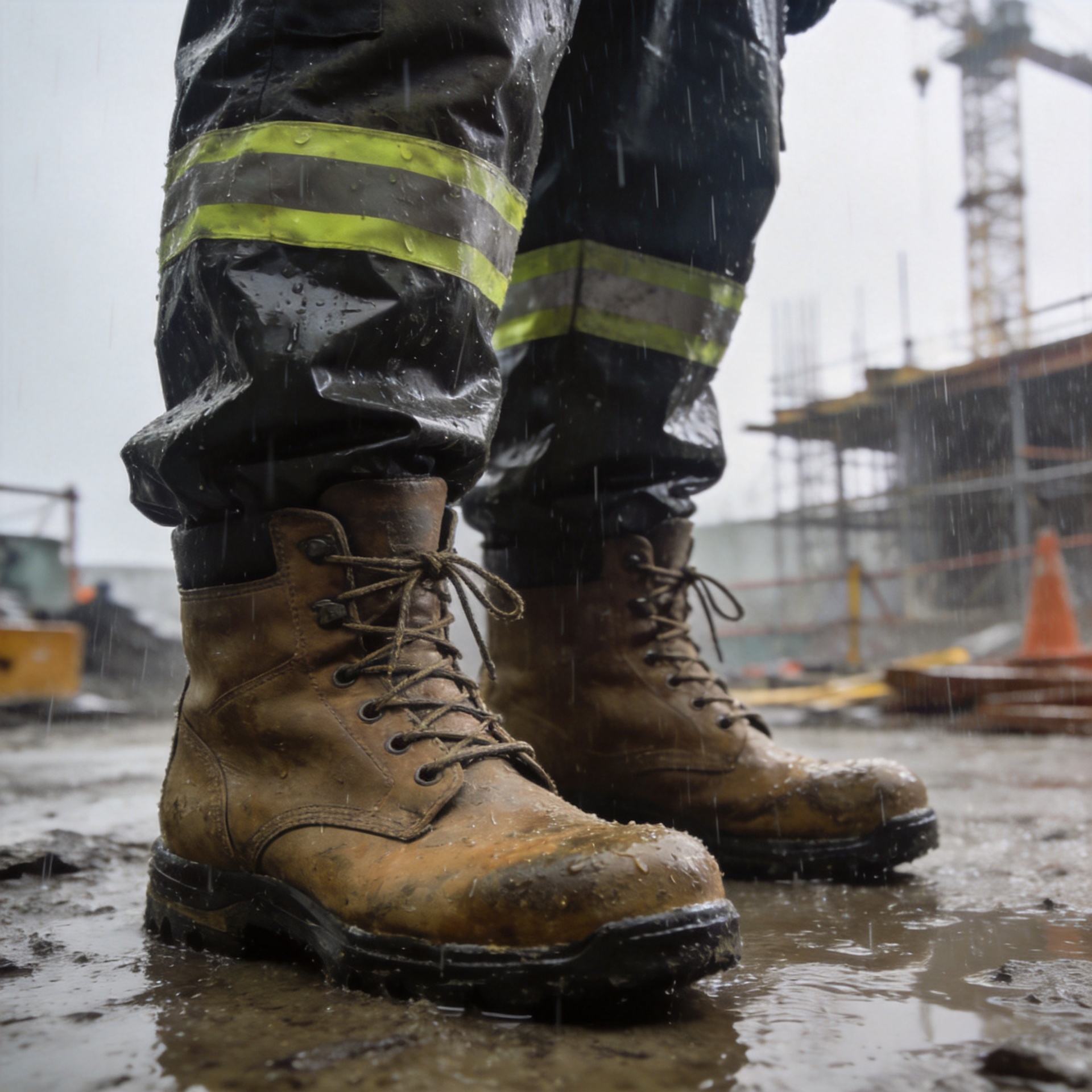
Standard work boots use full-grain leather, waterproof membranes, or dense synthetic uppers. These materials form an effective barrier, which is exactly what makes work boots suitable for cold or wet conditions. In hot weather, however, that barrier works against worker comfort. There is no path for air to enter or for moisture vapor to escape. The foot generates heat continuously during physical activity, and inside sealed work boots, that heat accumulates with nowhere to go.
Sweat follows. As moisture builds up inside work boots, the lining becomes saturated. Workers develop blisters, skin irritation, and odor over time. More critically, workers become less willing to wear their work boots correctly. In hot outdoor construction, non-climate-controlled warehouses, or manufacturing floors with limited ventilation, this is a recurring problem for safety officers.
A useful observation captures this issue: workers given heavy, non-breathable work boots for summer use will often start cutting corners on when and how they wear them. A pair of work boots that stays off the foot for half a shift offers no protection at all.
How Breathable Mesh Addresses the Problem
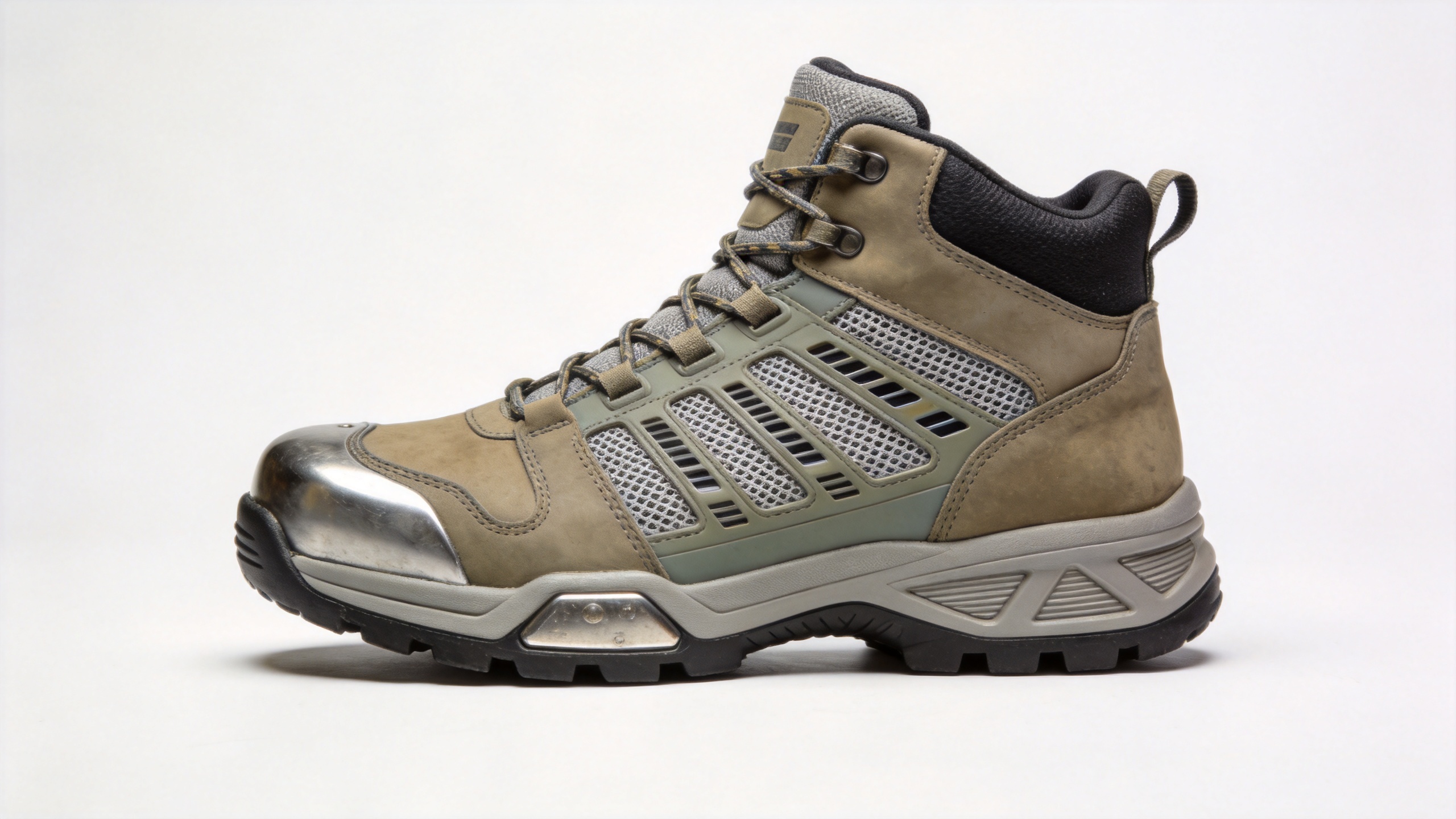
Breathable mesh work boots solve the heat and moisture problem through a dual-component system. The first component is the mesh upper panel. Mesh fabric (typically a woven or knit synthetic material) replaces or supplements the solid upper on the sides and sometimes the tongue of work boots. This creates open channels for air to flow in and out, reducing thermal buildup during extended wear.
The second component is a moisture-wicking liner. While the mesh panels manage airflow, the liner actively pulls sweat away from the foot surface and transports it toward the outer layers of the work boots where it can evaporate. Together, these two features reduce in-shoe temperature and maintain a drier environment across the full shift, which translates into better comfort and more consistent wear compliance.
An important technical point: the mesh is placed in the upper portion of work boots: the sides, instep, and sometimes the collar, not in the toe cap or midsole. The structural safety components remain intact. Ventilation in the upper does not compromise toe protection or electrical hazard ratings. Work boots with breathable mesh panels are regularly certified to ASTM F2413 standards, providing the same impact and compression protection as conventional enclosed-upper designs.
Key Benefits of Breathable Mesh Work Boots in Hot Conditions
For procurement managers evaluating work boots for summer deployment or permanent use in high-temperature environments, breathable mesh designs offer several concrete advantages.
Lower in-shoe temperature across the shift. Mesh panels allow ambient air to circulate through the upper of the work boots, reducing the thermal load on the foot. In outdoor construction or unshaded work areas, this can make a measurable difference in how workers feel by mid-shift and during peak afternoon heat.
Reduced moisture accumulation. Sweat-soaked work boots are not just uncomfortable; they also increase the risk of blisters, skin breakdown, and over time, fungal infections. A moisture-wicking liner combined with mesh airflow keeps the internal environment drier, reducing these risks across a workforce over a full season.
Better PPE compliance rates. This matters operationally. Uncomfortable work boots that workers avoid wearing are a safety liability. When breathable work boots reduce the discomfort associated with hot-weather use, workers are more likely to keep them on throughout the shift. That consistency is the actual protection outcome safety programs depend on.
Maintained safety certifications. Selecting work boots certified to ASTM F2413 or EN ISO 20345 ensures that the breathability improvement does not come at the cost of toe, puncture, or electrical hazard protection. The certifications apply to the complete boot construction, including breathable-upper variants.
Reduced boot weight in many designs. Mesh materials are generally lighter than full-grain leather or thick synthetic uppers. For workers who cover considerable ground on foot (logistics, assembly, inspection), lighter work boots reduce end-of-shift fatigue alongside the breathability benefit.
When Breathable Mesh Work Boots Are the Right Match
In most high-temperature dry work settings, breathable mesh work boots are the appropriate choice. Outdoor construction in summer, warehouse distribution centers without climate control, light manufacturing with active airflow, and agricultural environments are all scenarios where the breathability benefit is relevant and the trade-offs are manageable.
The primary limitation to acknowledge: mesh upper panels are not waterproof. If the work environment involves consistent standing water, frequent hose-down areas, or morning fieldwork in wet grass, a fully waterproofed upper may be more suitable than breathable mesh work boots. In dry heat conditions, adding a waterproof membrane behind the mesh reduces most of the breathability benefit, so the choice between waterproof work boots and breathable mesh work boots should be based on actual site conditions rather than defaulting to maximum weatherproofing.
Matching footwear construction to ambient temperature and activity level is a well-established safety management principle. Over-insulated or unnecessarily enclosed work boots in hot weather impair worker performance and comfort tolerance. Breathable mesh is the functionally appropriate construction for hot-weather work where waterproofing is not a daily necessity.
What to Prioritize When Specifying Breathable Work Boots
When evaluating breathable mesh work boots for bulk procurement, the following specifications are worth confirming before committing to an order:
- Mesh placement: Confirm that mesh panels are in the upper sides and not in structural safety zones of the work boots. Reputable manufacturers are explicit about where ventilation features are positioned relative to protective components.
- Liner material: A moisture-wicking or antimicrobial liner is the complement that makes mesh ventilation effective over multi-hour shifts. Confirm the liner specification in product documentation.
- Safety certification: Verify that the work boots are certified to the relevant standard for your market: ASTM F2413 for North America, EN ISO 20345 for Europe, or the applicable regional equivalent.
- Outsole durability: In hot environments, outsoles face high surface temperatures. Confirm that the outsole compound of the work boots is specified for the actual ground surface and temperature range.
- Sample testing: Worker feedback from a representative sample provides practical data that specification sheets cannot capture. Breathability performs differently depending on activity level and individual fit.
Choosing a Supplier for Custom Breathable Work Boots
For businesses that require work boots matched to specific industry environments or configured to company specifications, the ability to customize upper materials, liner selections, and safety feature combinations separates a standard catalogue purchase from a purpose-built solution.
MaxiTough specializes in customized safety footwear including work boots designed for specific environmental conditions such as hot-weather deployments. With direct manufacturer supply, flexible order volumes, and deep familiarity with protective footwear requirements across industries, MaxiTough supports procurement teams in identifying the right breathable mesh configuration for their workforce. Whether the requirement is a standard breathable work boot or a configuration adapted to an unusual combination of protective and comfort specifications, the selection process benefits from a supplier with focused PPE expertise.
If you are sourcing breathable work boots for a hot-weather environment, start by matching the upper construction to the actual thermal and moisture conditions of the site. Breathable mesh is a well-validated engineering approach to this problem, with a clear mechanism and proven compatibility with major safety certification requirements.