EN
EN
 AR
AR BG
BG HR
HR CS
CS DA
DA NL
NL FI
FI FR
FR DE
DE EL
EL HI
HI IT
IT JA
JA KO
KO NO
NO PL
PL RO
RO RU
RU ES
ES SV
SV TL
TL ID
ID SR
SR VI
VI HU
HU MT
MT TH
TH TR
TR AF
AF MS
MS GA
GA BN
BN NE
NE
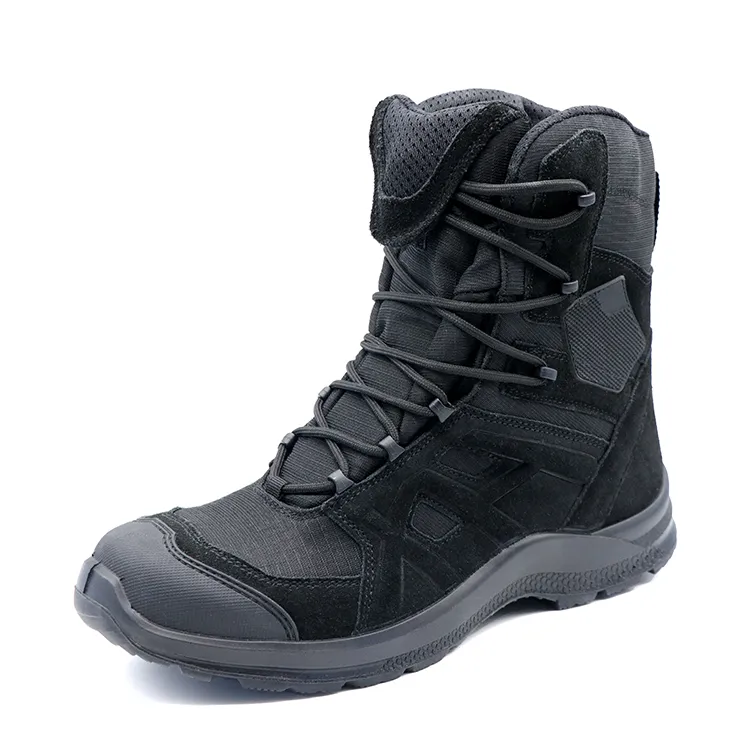
Why Steel Toe Shoes for Men Are Resistant to Compression
When a 40-pound steel beam rolls off a shelf or a forklift tire inches over your foot, the difference between a serious injury and walking away safely often comes down to what is protecting your toes. Compression force — the kind that slowly crushes rather than strikes — is one of the most underestimated hazards in industrial workplaces. Steel toe shoes for men are specifically engineered to counter this threat, and understanding the "why" behind that resistance can help you make a smarter, better-informed footwear decision.
What Compression Resistance Actually Means
Compression resistance is not the same as impact resistance, though the two are often confused. Impact resistance addresses sudden, high-velocity blows — a hammer falling straight down, for instance. Compression resistance deals with sustained, crushing loads: a rolling cart wheel, a heavy pallet edge, or a piece of equipment slowly pressing down on the toe area.
In the United States, the ASTM F2413 standard establishes the baseline requirement. Under the C/75 rating, the toe cap of a certified safety shoe must withstand a compressive load of 2,500 pounds (approximately 11.1 kN) without collapsing to the point that the internal clearance drops below a defined minimum. The European EN ISO 20345 standard sets the threshold even higher — at least 15 kilonewtons (kN), equivalent to roughly 1.5 metric tons of pressure — reflecting the diverse heavy-industry environments across the EU.
Both standards are measured with the shoe loaded onto a foot-shaped last, ensuring that the cap protects the actual toe space rather than just surviving a flat-plate test in a lab.
Why Steel Is the Material of Choice for Compression Resistance
From a materials science perspective, steel's suitability for compression-resistant toe caps comes down to three interrelated properties:
- High compressive yield strength. Industrial-grade steel used in safety toe caps has a compressive yield strength that typically exceeds 250 MPa. This means the material resists permanent deformation even under substantial, sustained loads. When force is applied, the steel deforms elastically before permanently yielding — and for the pressure levels workers encounter in most industrial settings, properly-specified steel caps remain well within the elastic range.
- Rigidity and shape retention. Unlike composite or thermoplastic materials, steel maintains its shape under gradual, creeping loads — the type of load produced when a heavy object slowly shifts weight onto a stationary foot. This shape retention is the mechanical core of compression resistance: the cap acts as an arch that redistributes compressive forces around the toe cavity rather than transmitting them into the foot.
- Thin-wall structural efficiency. Precision cold-forming processes allow manufacturers to engineer steel caps that are thin yet structurally robust. This means the protective shell takes up less interior space inside the shoe while still delivering the required compression resistance — an important design balance, since a cap that intrudes too far into the toe box creates discomfort and reduces wear compliance.
From a procurement standpoint, steel toe caps also deliver proven, widely auditable performance. Unlike newer composite materials that require more complex testing to validate, steel caps have decades of documented performance data and well-established supply chain quality benchmarks.
How the Cap Design Amplifies Resistance
Material strength alone does not account for the consistent performance of steel toe shoes for men across different loading conditions. The geometry of the cap plays an equally significant role.
A properly designed steel toe cap functions like a shallow arch or vault. When compressive force is applied from above or from the side, the arched geometry converts the vertical load into compressive stresses along the shell wall, where steel's structural properties are most effective. This load-path management prevents the cap from simply buckling inward.
Manufacturers control three key geometric parameters during production:
- Cap height. The internal clearance height determines how much the cap can deform before touching the toes. Standards specify a minimum residual clearance after the compression test is complete — typically around 22 mm — to ensure the toe remains protected even under maximum test load.
- Wall thickness. A thicker wall raises compressive strength but adds weight. Precision-stamped caps optimize this trade-off, delivering standard-compliant resistance with wall sections that keep overall shoe weight manageable for full-shift wear.
- Flange geometry. The lip that anchors the cap to the shoe's upper and midsole provides a load-distribution interface. Well-engineered flanges spread the reaction forces across a broader contact area, preventing point-load stress concentrations that could initiate early yielding.
Real-World Hazards That Compression-Resistant Steel Toe Shoes Address
Understanding the engineering principles is useful, but it becomes more concrete when mapped to actual workplace scenarios:
- Warehousing and logistics: Loaded pallet jacks can exert several hundred kilograms of downward and rolling force. Workers whose feet are caught between a pallet jack wheel and a hard floor face exactly the type of sustained compression force that ASTM C/75 or EN ISO 20345 certification addresses.
- Construction and heavy industry: Rolled steel sections, concrete blocks, and equipment components regularly create roll-over risks. A steel toe cap rated for 2,500 lbs of compression provides meaningful protection during these momentary but high-consequence events.
- Manufacturing and assembly: Press operators, machine attendants, and material handlers in environments where heavy components are regularly repositioned benefit from the consistent, predictable protection that certified steel toe shoes for men provide.
Compression resistance addresses one specific hazard, and it works alongside other protective features — puncture-resistant midsoles, slip-resistant outsoles, and electrical hazard ratings each handle different risks. If your workplace involves both falling-object impact and rolling compression, look for footwear certified for both I/75 and C/75 under ASTM F2413, or the equivalent EN ISO 20345 markings.
What to Look for When Selecting Steel Toe Shoes for Men
Selecting the right footwear requires more than confirming that a "steel toe" label is present. A few key things to verify:
- Verify the compression rating mark. In North America, look for C/75 on the ASTM label; in EU-market products, look for the EN ISO 20345 marking. Products without clearly stated certification marks cannot be verified to meet the tested load thresholds.
- Check internal clearance comfort. Because the toe cap occupies space inside the shoe, ensure the footwear allows adequate toe room when standing. Caps designed with optimized wall thickness and geometry provide more interior space without sacrificing compression resistance.
- Match the cap to the hazard level. Standard industrial compression environments are well served by C/75-rated footwear. Some heavy-industry environments — particularly mining, tunneling, or heavy forging — may require additional metatarsal protection or higher-rated European categories.
- Prioritize consistent batch quality. Compression resistance is only meaningful if the cap geometry and material specification are maintained from sample to bulk production. Working with manufacturers who implement systematic quality controls on cap geometry, wall thickness, and raw material sourcing helps ensure that the protection tested in the lab matches the protection delivered on the job.
At MaxiTough, we manufacture steel toe shoes for men with controlled specifications on key protective components — including the toe cap, midsole, and outsole. Our products are designed to support certification to major market standards, and we offer technical consultation to help buyers match footwear specifications to their actual workplace hazard profiles. For bulk buyers and OEM partners, our quality documentation processes provide the traceability needed to support incoming inspections and compliance audits.
Conclusion
Steel toe shoes for men resist compression because of a combination of material properties and structural engineering: steel's high compressive yield strength, the arch-like geometry of a properly-formed toe cap, and precision manufacturing controls that maintain those properties across production batches. When certified to ASTM F2413 C/75 or EN ISO 20345, these shoes have been independently tested to withstand the compression loads that workers encounter in logistics, construction, and manufacturing environments.
Understanding this mechanism helps you evaluate footwear specifications with confidence — rather than relying on generic safety claims — and select steel toe shoes that genuinely deliver the protection your workplace requires.