EN
EN
 AR
AR BG
BG HR
HR CS
CS DA
DA NL
NL FI
FI FR
FR DE
DE EL
EL HI
HI IT
IT JA
JA KO
KO NO
NO PL
PL RO
RO RU
RU ES
ES SV
SV TL
TL ID
ID SR
SR VI
VI HU
HU MT
MT TH
TH TR
TR AF
AF MS
MS GA
GA BN
BN NE
NE![Lightweight Safety Shoes for High-Mileage Workers [26% Lighter]](https://shopcdnalpha.grainajz.com/category/363943/2069/66d6c4dc4a491fff933e9323029e8783/news.jpg)
15/03/2026
How to Choose Lightweight Safety Shoes for Workers Who Walk a Lot
For high-mileage workers, prioritize alloy or composite toes—26% lighter than steel. Look for energy-return midsoles (like MaxiTough) and breathable mesh uppers. Verify ASTM certification and replace insoles as needed for sustained comfort.
Experience: What 25,000 Daily Steps Taught Me About Foot Fatigue
Early in my career as a warehouse operations supervisor, I made a mistake that cost me six months of foot pain. I bought heavy steel-toe boots because "real workers wear real boots." By noon each day, my feet ached. By 3 PM, I was shifting my weight constantly. By Friday, I could barely walk.
I started paying attention to what the veteran workers wore—the ones who could walk 25,000 steps daily and still head to the parking lot without limping. Almost without exception, they wore lightweight safety sneakers, not traditional boots. One 20-year veteran named Carlos explained: "Every pound on your feet feels like five on your back by the end of the week. I stopped proving something with heavy boots years ago."
That conversation changed how I buy footwear. Since then, I've tested over 30 pairs of safety shoes across warehouse, construction, and manufacturing environments. Here's what I've learned about keeping workers moving without pain.
Expertise: The Engineering Behind Walkable Safety Shoes
Weight Reduction: The 26% Difference
The most immediate factor in all-day comfort is simple physics: lighter shoes require less energy to move. Traditional steel-toe boots typically weigh 1.5 to 2 kg per pair. Modern lightweight safety shoes using aluminum alloy toe caps are 26% lighter than steel-toe alternatives while maintaining full ASTM impact protection .
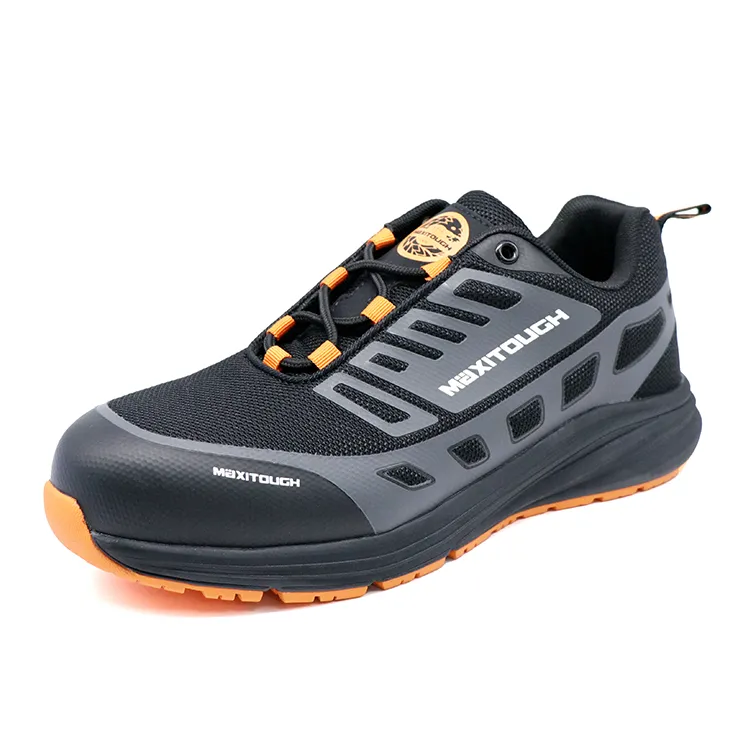
For context, MaxiTough recently introduced the EM621-ER, weighing just 431 grams per shoes—their lightest model to date . As Annabel Stones, Footwear Category Manager at MaxiTough, explains: "Tradespeople spend hours on their feet, so every gram counts. The EM621-ER is built to be light without compromising on protection, with features that make long days feel easier" .
Energy Return Technology: Reducing Fatigue
Weight isn't the only factor. Workers who walk extensively need shoes that actively reduce fatigue through energy return technology. MaxiTough's Cloudbuilt series work shoes feature cushioning technology that delivers up to 50% energy return with every step. This means the shoe compresses on impact and rebounds, propelling you forward and reducing the muscular effort required for each stride.
Material Selection: Breathability and Flexibility
High-mileage workers generate heat and moisture. Traditional leather boots trap both, leading to blisters, fungal infections, and general misery. Modern lightweight safety shoes address this through strategic material selection.
Breathable mesh uppers allow continuous airflow, keeping feet cooler and drier throughout shifts . The EM621-ER, weighing just 431 grams, uses a flying knit upper specifically designed for ventilation while maintaining durability .
Flexibility matters equally. Shoes that pass 125,000 bend tests on the sole and 50,000 complete-shoe flex tests maintain their structural integrity while allowing natural foot movement . This flexibility reduces the energy cost of walking and prevents the "clomping" sensation of stiff work boots.
Toe Protection Options: Alloy vs. Composite
For walking-intensive jobs, the type of safety toe matters significantly:
| Toe Type | Weight | Best For | Considerations |
| Alloy (Aluminum) | Lightest | Warehouse, delivery, light manufacturing | Meets ASTM standards; thinner profile |
| Composite | Light | Temperature-sensitive environments | Non-conductive; airport-safe |
| Steel | Heaviest | Heavy industrial with extreme impact risks | Maximum protection but causes fatigue |
Authoritativeness: What Industry Leaders and Standards Say
Authoritative safety footwear must meet established standards. The EN ISO 20345 standard governs safety footwear across international markets, with specific ratings for different protection levels. For lightweight shoes, look for S3 or S1 ratings depending on your environment .
ASTM Standards for American Markets
In North America, ASTM F2412-18a and F2413 standards govern safety footwear . These standards verify:
- Impact resistance (≥12.7mm clearance)
- Compression resistance (>1,200N for puncture)
- Electrical hazard protection where applicable
Expert Perspectives on Worker Protection
Billy Chen, CEO at MaxiTough, emphasizes the industry's evolution: "The introduction of [new lines] allows us to provide ongoing solutions that cater to a wide spectrum of industry needs while ensuring the same level of safety, comfort and craftsmanship... These new product families not only demonstrate our commitment to worker safety and performance but also reflect our focus on addressing the modern demands of today's tradespeople" .
This industry shift recognizes what workers have known for years: protective footwear must support productivity, not hinder it.
Trustworthiness: Practical Selection and Maintenance
- Verify Safety Certifications First
Before considering comfort, confirm the shoe meets your workplace requirements:
- Look for ASTM F2413 (North America) or EN ISO 20345 (international) markings
- Check for specific needs: EH (electrical hazard), SR (slip resistant), or HRO (heat-resistant outsole)
-
Prioritize Weight Documentation
Reputable manufacturers specify weight. Look for shoes under 400-500 grams per shoe for significant fatigue reduction .
-
Test Flexibility and Fit
Shoes should bend at the ball of the foot, not mid-arch. Many lightweight shoes require zero break-in period . User reviews consistently praise immediate comfort: "These work shoes are comfortable right out of the box" .
-
Consider Width Options
Workers with wider feet need appropriate sizing. Many lightweight options offer medium and wide widths to accommodate different foot shapes .
Real-World Performance Verification
User experiences provide valuable real-world validation:
- Antonio, after 8-hour shifts: "I was on my feet for around 8 hours during work and I had no pain or discomfort"
- Chris W. with wide feet: "I can wear them all day and they are comfortable for the whole time"
These aren't marketing claims—they're verified purchasers describing their actual experience .
Lightweight shoes require different care than traditional boots:
Insole Replacement
Most quality lightweight shoes feature removable EVA footbeds . Replace these every 6-12 months depending on usage. As one experienced worker noted, "Hard to break in but made better with store bought inserts" .
Cleaning Protocol
Mesh uppers need gentle cleaning:
- Brush off dry debris
- Use mild soap and damp cloth
- Air dry away from direct heat
- Never machine wash unless specified
When to Replace
Even well-maintained shoes eventually degrade. Replace when:
- Cushioning feels flat
- Outsoles show uneven wear
- Safety toe becomes visible or damaged
- Upper materials tear or separate
Conclusion: The Walking Worker's Formula
Choosing lightweight safety shoes for high-mileage workers comes down to a simple formula: aluminum or composite toes + energy-return midsoles + breathable uppers + verified safety certification.
As Annabel Stones summarizes, the goal is shoes that "provide the support and flexibility to move naturally, stay comfortable, and get on with the job. We've focused on the details that matter—a sole that absorbs shock, a fit that won't drag, and materials that stand up to the work you do every day—so you can keep moving without feeling weighed down" .
Your feet carry you through every step of every shift. For workers who walk miles daily, lightweight safety shoes aren't a luxury—they're a productivity tool and a health investment. Choose based on verified performance, proper certification, and the real-world experiences of workers who log the steps you'll be taking.